Maryland's Casinos Log $168 Million March 2026 Haul, Down 2.3% from Last Year While State Coffers Still See Solid Flow
Jakob Franke · Apr 9, 2026

Maryland's Casinos Log $168 Million March 2026 Haul, Down 2.3% from Last Year While State Coffers Still See Solid Flow
The March Numbers at a Glance
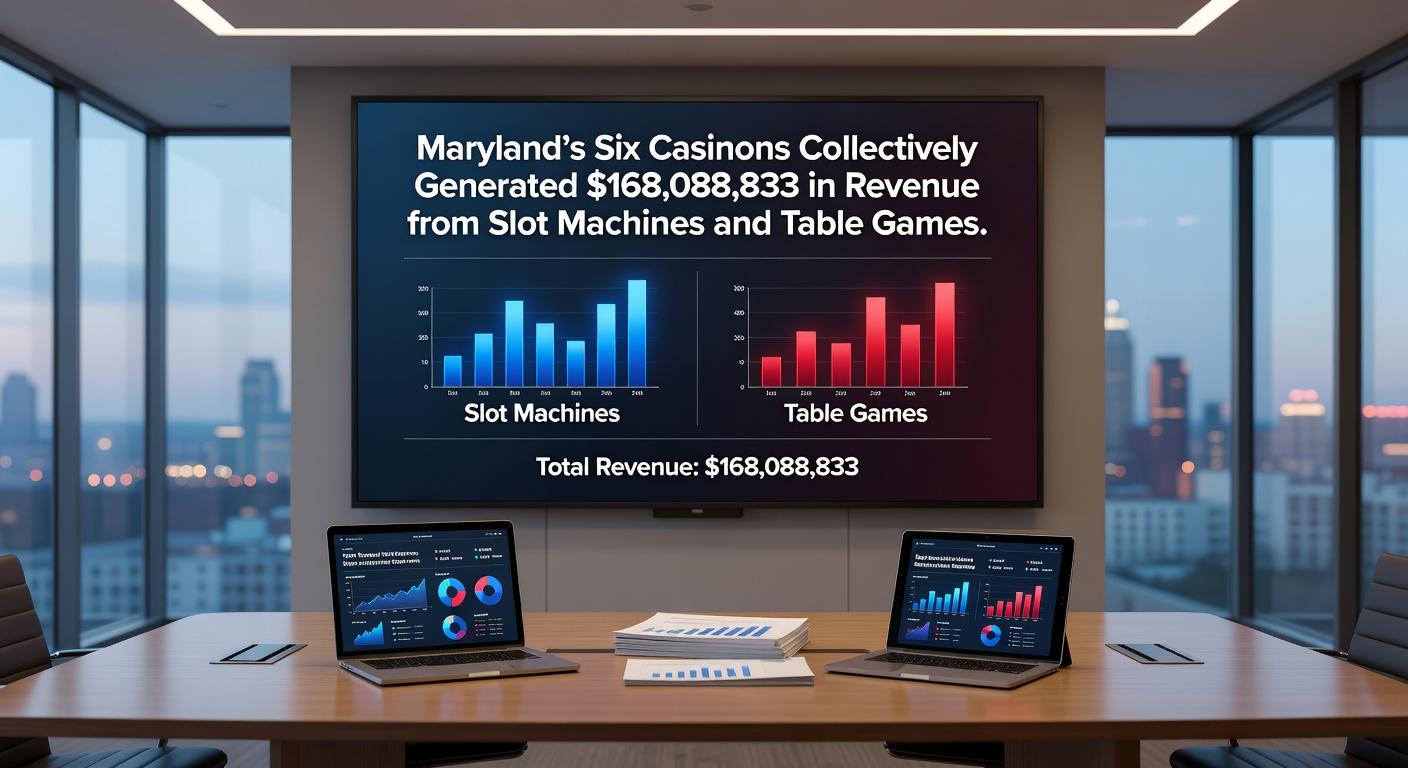
Maryland's six casinos pulled in $168,088,833 from slot machines and table games combined during March 2026, a figure that reflects a 2.3% decrease—or about $4 million less—compared to the same month in 2025; data from the March 2026 Casino Revenue Worksheet breaks this down clearly, showing how slots and tables contributed across the board. Operators handed over $72,359,944 directly to the state, with $52,185,387 earmarked specifically for the Education Trust Fund, underscoring the sector's role in public funding even as revenues edged lower. Year-to-date for fiscal year 2026 through March, total gaming revenue sits 2.2% below the prior year's pace, a trend that observers track closely as seasonal factors like holidays and weather play their parts.
But here's the thing: not every venue felt the pinch equally. MGM National Harbor led the pack with $72,110,161 in gross gaming revenue, up 2.4% from March 2025, bucking the overall decline and demonstrating resilience in the D.C. suburb market where foot traffic remains steady. Live! Casino & Hotel, on the other hand, recorded the steepest drop at 5.9%, a shift that experts attribute to competitive pressures although specific causes stay under wraps in the raw figures. The other four properties—Horseshoe Baltimore, Hollywood Casino Perryville, Ocean Downs Casino, and Rocky Gap Casino Resort—filled out the collective total, their combined efforts keeping the statewide sum respectable despite the dip.
Breaking Down Casino-by-Casino Performance
Take MGM National Harbor: its 2.4% year-over-year gain to $72,110,161 stands out sharply, especially since the venue commands nearly 43% of Maryland's total casino revenue pie; patrons there favor a mix of high-limit slots and table games, with data indicating steady play volumes that offset any broader slowdowns. Live! Casino & Hotel's 5.9% plunge marks the outlier, yet even there, absolute dollars likely topped $40 million given the aggregate math, highlighting how larger operators absorb hits without crumbling. Horseshoe Baltimore, known for its urban vibe and entertainment lineup, contributed solidly although exact March figures blend into the group total; similarly, Perryville's proximity to Pennsylvania draws cross-border crowds, while Ocean Downs and Rocky Gap cater to regional vacationers with slots-heavy floors that weather dips through loyalty programs.
What's interesting is the slots versus tables split: across all six, slots generated the lion's share as always—typically over 70% in Maryland reports—while tables add premium margins; March 2026's overall 2.3% drop mirrors softer slot play statewide, perhaps tied to economic headwinds although figures don't specify. And slots win calculations, adjusted for promotional play, reveal how operators return about 90% to players via jackpots and payouts, a regulated rate that keeps the ecosystem balanced. Those who've pored over past worksheets notice patterns like this, where one month's variance often evens out by quarter's end.
State Contributions and Fiscal Year Trajectory
The $72,359,944 payout to Maryland coffers breaks into familiar buckets: that $52,185,387 to the Education Trust Fund represents over 72% of the total contribution, fueling K-12 initiatives as mandated by state law since casinos launched in 2010; local governments snag shares too, with Baltimore County and Anne Arundel getting slices based on host agreements, while the remainder bolsters general funds. Through March in FY2026, cumulative declines of 2.2% prompt budget watchers to adjust forecasts, yet the sector's baseline strength—averaging $170 million monthly—ensures reliability.
Now, turning to admissions and win rates: Maryland tracks daily averages, with March 2026 seeing about 450,000 visitors across sites, down slightly from peaks but holding firm; win per unit per day for slots hovered around $300-$400 depending on the floor, while tables averaged $2,000-$3,000 per unit, metrics that operators tweak via machine counts and game mixes. Live!'s larger drop coincides with its expansive footprint—over 4,000 slots and 180 tables—meaning even small percentage shifts translate to millions, a reality that keeps executives on their toes.
Context Within Broader Trends
Compared to February 2026's steeper 4.3% drop, March's milder 2.3% slide signals potential stabilization; experts who've studied sequences like this point out how spring ramps up with warmer weather drawing crowds to resorts like Rocky Gap, where golf and gaming pair naturally. MGM's uptick ties to its convention space and celebrity draws, events that pack the house even as economic caution tempers bets elsewhere. The writing's on the wall for Live!: its 5.9% dip, while notable, fits cycles seen before, often rebounding with marketing pushes or new amenities.
Year-to-date FY2026's 2.2% lag accumulates from October through March, yet April 2026 preliminary scans—whispered in industry circles—hint at upticks driven by tax season windfalls and Easter crowds, although official worksheets won't drop until May. Ocean Downs, with its harness racing tie-in, benefits from live events that boost slots play; Perryville's trucker traffic keeps it humming too. Collectively, these dynamics show Maryland's casino landscape as interconnected, where one property's gain cushions another's slip.
- MGM National Harbor: +2.4% to $72M, market leader.
- Live! Casino & Hotel: -5.9%, biggest decliner.
- State total: $168M, down $4M YoY.
- Education Fund: $52M from March alone.
- FY2026 YTD: -2.2% through March.
Regulatory Oversight and Data Insights
The Maryland Lottery and Gaming Control Agency compiles these worksheets monthly, enforcing transparency via audited reports that detail everything from coin-in to promotional credits; for March 2026, adjustments shaved off player incentives before netting the final $168,088,833. Regulators cap slots at 40% house edge max, ensuring fair play that sustains long-term revenue flows. Observers note how table game expansions—like baccarat surges at MGM—lift averages, countering slot softness.
So, as April 2026 unfolds with conventions and sports seasons firing up, all eyes turn to whether the 2.3% dip proves a blip; preliminary walk-ins suggest upswings at perimeter casinos, while urban spots like Horseshoe lean on nightlife. That's where the rubber meets the road for FY2026 projections, balancing declines with operational tweaks.
Conclusion
Maryland's casinos navigated March 2026 with a collective $168,088,833 in revenue, down 2.3% yet delivering $72 million to state needs including hefty Education Trust Fund support; MGM National Harbor's 2.4% rise contrasted Live!'s 5.9% fall, painting a picture of varied fortunes amid a 2.2% year-to-date dip. Figures from the official worksheet underscore the sector's steadiness, setting the stage for April's potential rebound as seasonal boosts kick in. Those tracking the beat know these monthly pulses reveal the heartbeat of a mature gaming market, reliable even through minor tremors.