Indiana Governor Signs Casino Expansion Law While Virginia Bill Draws Local Fire
Finley Schmitz · Mar 11, 2026

Indiana Governor Signs Casino Expansion Law While Virginia Bill Draws Local Fire
Unexpected Advances in Casino Legislation Across Two States
Legislators in Indiana and Virginia have pushed casino expansion bills forward in ways that caught many off guard, with Indiana's Governor Mike Braun putting his signature on HB 1038 on March 4, 2026, and Virginia's SB 756 clearing both chambers of the General Assembly; these moves open doors to new gaming opportunities, yet they stir up debates among local leaders and stakeholders who see the paths diverging sharply from earlier industry relocation pushes.
What's interesting here is how Indiana's bill zeroes in on specific rural counties while Virginia broadens its scope across an entire urban area, highlighting the patchwork nature of gambling policy in the U.S. where state-by-state decisions shape the industry's footprint; observers note that such expansions often hinge on voter input or gubernatorial actions, and that's exactly where things stand now in both places.
And while Indiana moves toward referendums, Virginia braces for a potential veto, underscoring the tension between economic promises and community concerns that lawmakers must navigate.
Indiana's HB 1038: A New License on the Horizon
Governor Mike Braun's signing of HB 1038 into law on that crisp March day in 2026 marked a pivotal shift for the Hoosier State's gaming landscape, authorizing a fresh casino license targeted at Allen, DeKalb, and Steuben counties; these areas, known for their mix of agriculture and small-town vibes, now stand poised for development pending voter approval in November 2026 and developer bids due by April 2027, a timeline that gives communities time to weigh in before shovels hit the ground.
But here's the thing: the bill pointedly excludes Indianapolis, steering clear of the capital's already bustling casino scene and focusing instead on underserved regions where proponents argue gaming revenue could boost local economies without overlapping existing operations; data from similar expansions elsewhere shows such projects generating millions in taxes and jobs, although specifics for these counties remain tied to the upcoming votes.
Full House Resorts emerges as a key player in discussions around this bill, having eyed opportunities in Indiana before, yet the legislation's structure invites competitive bidding, meaning no single operator holds all the cards just yet; those who've tracked the industry's moves point out that this approach contrasts with past efforts where companies pushed for relocations rather than greenfield builds, and that's where the rubber meets the road for stakeholders betting on fresh licenses.
Take one scenario experts have outlined: if voters in those three counties greenlight the casino come November, bids rolling in by spring 2027 could spark construction as early as late next year, injecting vitality into areas that have long sought diversification beyond traditional sectors; it's noteworthy that HB 1038's passage followed intense legislative wrangling, with supporters framing it as a measured step forward in a state where gaming has been a revenue staple since riverboats first docked decades ago.
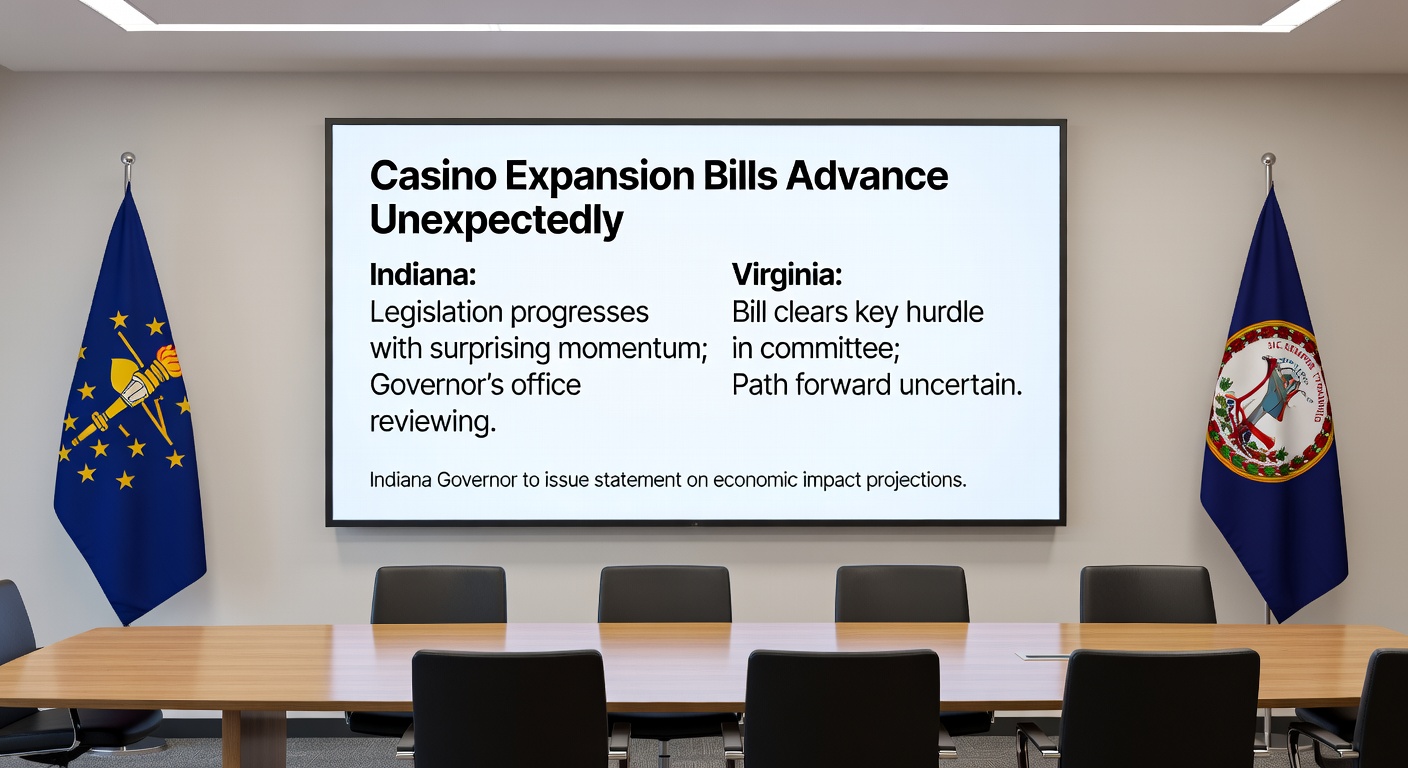
Virginia's SB 756: County-Wide Eligibility Sparks Backlash
Over in Virginia, SB 756 sailed through both the House of Delegates and the Senate, expanding casino eligibility to every corner of Fairfax County rather than limiting it to the Tysons area as initially proposed; this broader reach has local officials up in arms, with many urging Governor Glenn Youngkin to wield his veto pen against what they call an overreach into densely populated suburbs.
Turns out, the bill's evolution during session reflected lawmakers' push to maximize development potential in one of the nation's wealthiest counties, where proximity to D.C. could draw high-rollers and tourists alike; yet opposition from Fairfax leaders highlights concerns over traffic, crime, and quality-of-life impacts, echoing patterns seen in other expansion fights where urban areas clash with state-level ambitions.
Stakeholders like Full House Resorts, active in regional gaming talks, stand to benefit if the bill holds, but the veto threat looms large since local voices carry weight in Virginia's political calculus; according to an iGaming Business report, this divergence from relocation-focused strategies marks a new chapter, as operators now chase standalone sites amid a post-pandemic boom in legalized gambling.
People who've followed Virginia's gaming arc know the state has rolled out casinos in places like Portsmouth and Danville already, generating substantial tax hauls—figures reveal over $500 million in revenue since 2021—yet Fairfax's inclusion represents uncharted territory for such a high-profile locale; opponents argue the county's infrastructure can't handle another major draw, while backers counter that careful site selection could mitigate issues, leaving the governor's desk as the next battleground.
Stakeholders and the Bigger Picture
Lawmakers in both states collaborated with industry heavyweights like Full House Resorts, whose executives have lobbied for footholds in emerging markets, but these bills sidestep prior relocation bids by carving out new licenses instead; that's significant because it levels teh playing field, inviting bids from multiple players rather than pitting incumbents against newcomers in zero-sum fights.
So now, with Indiana's clock ticking toward November referendums and Virginia awaiting executive action, stakeholders hold their breath; experts who've studied these dynamics observe that voter turnout in rural Indiana counties could tip the scales, much like how urban opposition has derailed projects elsewhere, while Fairfax's clout might sway the veto decision one way or the other.
One case that comes to mind involves past Indiana expansions where referendums passed handily in economically strapped areas, paving the way for resorts that now anchor local tourism; Virginia's path feels dicier, given Fairfax's affluence and activism, yet the bill's passage through both chambers signals strong legislative momentum that governors rarely ignore outright.
And although details on projected revenues remain preliminary, patterns from neighboring states suggest a new Indiana casino could mirror successes like Ohio's facilities, pulling in crowds from nearby Michigan and Ohio, whereas Virginia's Fairfax play might tap D.C. commuters seeking quick escapes.
Timelines and Next Steps Unfold
In Indiana, the November 2026 referendums will test community appetite directly, with bids following only if voters say yes, a deliberate safeguard that lets locals decide their fate; by April 2027, if all aligns, developers could break ground, transforming quiet county landscapes into gaming hubs complete with hotels and entertainment.
Virginia moves faster toward resolution, as Governor Youngkin faces a decision deadline soon after session's end, potentially forcing a special session if he sends it back; local officials have ramped up their campaigns, flooding airwaves with pleas that underscore the divide between state revenue goals and neighborhood preservation.
But here's where it gets interesting: both developments tie into a national trend where 40 states now host commercial casinos, up from just a handful two decades ago, and these bills exemplify how rural revitalization clashes with suburban caution in the ongoing expansion saga.
Conclusion
Indiana's HB 1038 now stands as law, charting a course for potential casinos in Allen, DeKalb, and Steuben counties through voter referendums and bids, while Virginia's SB 756 hangs in the balance amid Fairfax County's vocal resistance; stakeholders from Full House Resorts to local leaders watch closely as these twists redefine gaming's reach, diverging from old relocation plays into fresh territory that could reshape regional economies if timelines hold.
Ultimately, November 2026 votes in Indiana and a looming veto call in Virginia will clarify the story's next chapter, reminding everyone that in the casino world, the house doesn't always win on the first bet; observers expect ripple effects across the industry, as these states' choices influence bids, builds, and budgets for years to come.